All You Want to Know About a Sales Funnel
In a ‘sales-driven’ business world, a sales funnel is a predominant terminology that must be ingested well into your system. Grasping everything about a sales funnel is primary to managing prospects and leads, in an effective manner. But, as customer likings change, the sales funnel processes may undergo a change.
A sales funnel showcases the entire sales journey of a customer right from identifying the brands to the final buyout but thanks to modern-day technological evolutions, there are continual changes being noted in today’s sales funnel operations.
Let us glance through the fundamentals of a sales funnel, how it works and how effective it is in converting leads into sales and growing business multi-fold.
What is Sales/Purchase Funnel?
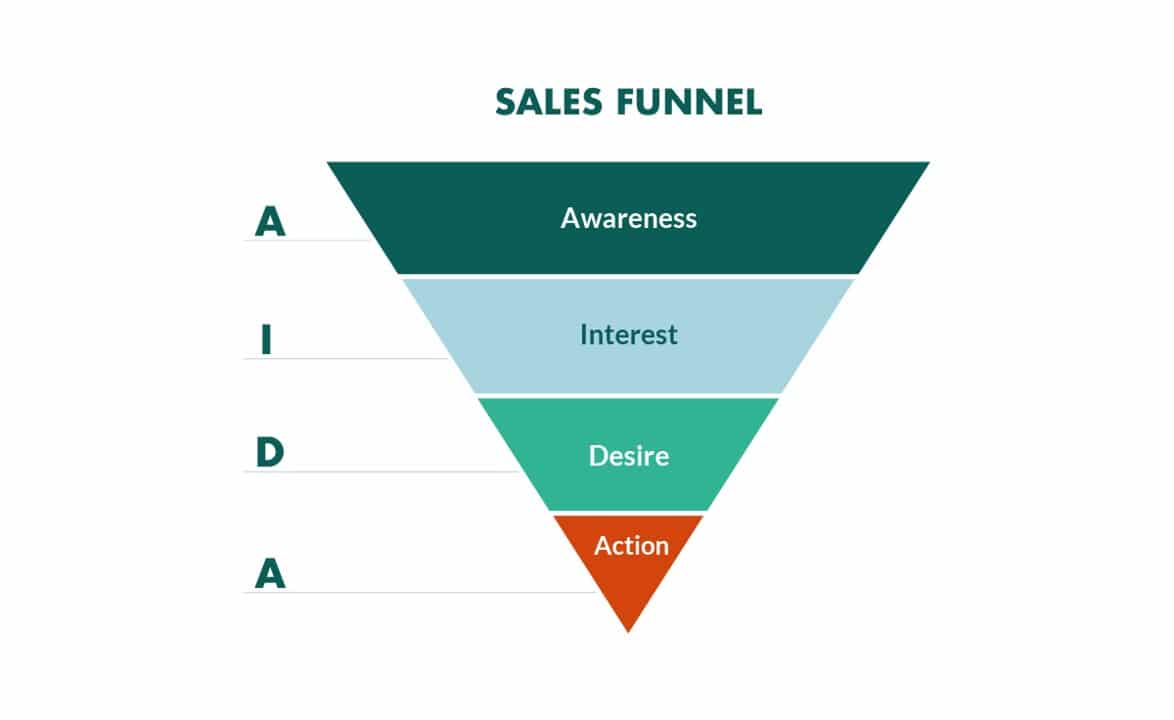
A sales funnel is also known as a purchase funnel or revenue funnel. It is a visual representation of the client’s journey, showing the sales procedure from awareness to action. It is a marketing terminology that portrays the different steps that the customer or any involved stakeholder takes, during the entire purchase process.
The reason why it is called a funnel is that it narrows as more visitors go through it. There will be an increased number of prospects at the top of the funnel than concentrated buyers at the other end and hence the shape and concept of a funnel exist. There are multiple sales levels to a sales funnel – top level, middle level, and bottom level of a funnel, based on the organizational sales policies.
Why is Sales Funnel Important?
It is needless to emphasize how important is sales to any business economy and how important it is to convert all possible prospects into actual leads and into actual buyers. Else, businesses usually witness the dropping off prospects without getting converted into actual buyers. There comes the crucial role of a sales funnel. It assists in understanding the pulse of the potential buyers, their trends, patterns, and possible requirements.
These insights would be helpful in taking the appropriate steps for forthcoming marketing activities, messaging techniques and other relevant processes that could help seal a deal successfully. It could also help in identifying the loopholes in the entire process that are possible the loose areas from where the prospects are getting dropped off.
The key reasons why a sales funnel is important are:
- Delivery of the right information at the right time at the right place
- Synchronization between the marketing and sales teams
- Saving time and efforts
- Efficient business closures and profitability
- Increased conversion of leads into actual clientele
The Four Main Sales Funnel Stages
As the shape suggests, all customers or prospects must pass through different stages of the sales funnel for garnering the best of output. All these stages have their own significance based on the customer’s mindset at that moment and that is very crucial. Here are the four major stages of any sales funnel:
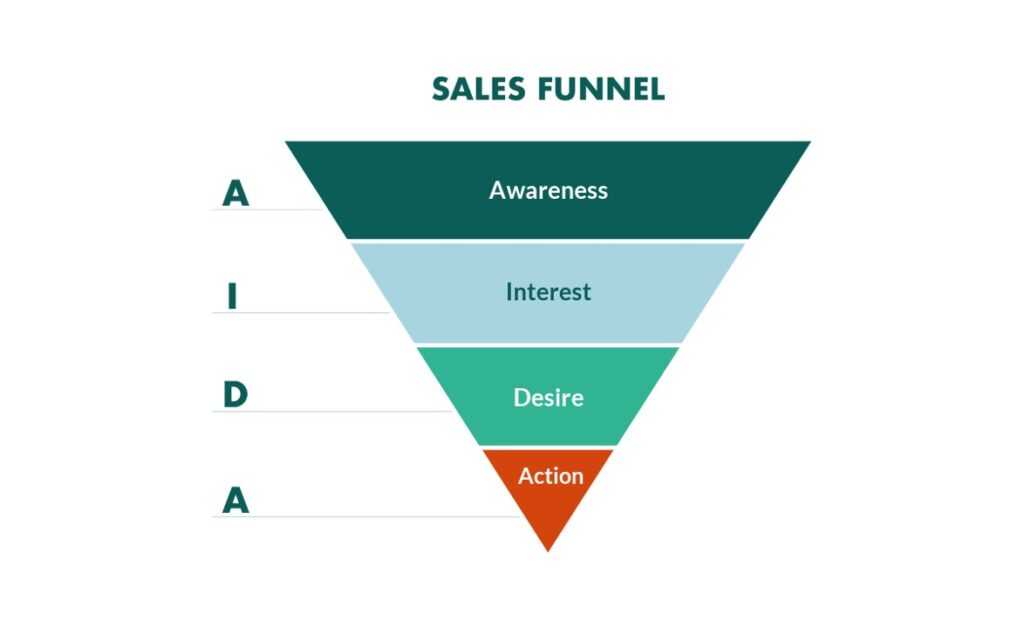
Awareness
This is the first stage of the funnel where the prospects become aware of your products, brands, and service. It could be through social media, emails, tweets, advertisements, reading your blogs, finding your website through a Google search, hearing from a colleague, etc. Once they move on, it is up to your own marketing capabilities to interest them further.
Interest
Once the prospects have known about your product or service, it is up to their interest levels if they want to proceed further and evaluate it or stop thinking about it. They may want to research it further to understand if they are making the right choice. They may compare it with peer products and that is where it is vital to convince them that you are the best choice.
Desire/Decision
Once the prospect is interested in your offering, there will be more of understanding the pricing schemes and delivery deadlines. At such times, remaining in contact with the prospect through phones, sales pages, etc. may help big time in preserving their interest. You could give them your best offer – free shipping, a gift, discount code, etc. that could compel them to be your customer.
Action
This is the final lap of the funnel where the prospect can turn into your customer, if interested. Here, it is important to take the necessary steps to ensure they don’t lose interest and change their decision. It is also important to seal the deal in such a way that the customer sustains loyalty and comes back for more business with you. You could invite the customer for feedback, offer yet another lucrative deal, offer free maintenance and support etc.
Key Sales Funnel Strategy Guidelines
It is very important to follow the below-mentioned guidelines to ensure an effective sales funnel and to build it in a fast manner:
- Collect data and analyze your customers in-depth
- Capture your audience’s attention and allure your prospects
- Post a range of marketing material of different social media platforms
- Create an attractive landing page that communicates who you are
- Have more of email campaigns that can communicate one on one
- Keep communicating to your prospects or customers through emails or any other media
- As you reach your prospect, give something of value to them
- Offer them product demos, free trials, special discounts etc.
- Keep checking measures and metrics at all levels of the sales funnel
- Ensure all your social media posts have a relevant call to action
Key Tips to Measure Success of Your Sales Funnel
However much we try, is it possible for us to manage and monitor the sales funnel activities manually? Absolutely not. It is important to have pre-defined measures and metrics that can calculate the progress of your leads and how well are they converting into an actual business. It can also help analyze the loopholes in your sales funnel and possible remedies to the same, that can accelerate the business flow and revenue growth.
Here are some key measures that can prove of great value for assessing your sales funnel progress:
- Customer retention rate – check if your customers are coming back for more orders or is it simply a single time business
- Lead velocity rate and conversion rate – growth in leads and rate of conversion of leads into actual orders, for better conversion strategies
- Time spent on all stages – this helps in ascertaining the time that you need for each stage of the sales funnel, helping in shortening the average sales cycle
- Opportunity count – to check the ratio between the prospects that entered the sales funnel till the last stage of conversion into customers
A Good Read: How Marketing Funnels Work (The Easiest Way to Create One)
Difference Between Marketing Funnel and Sales Funnel
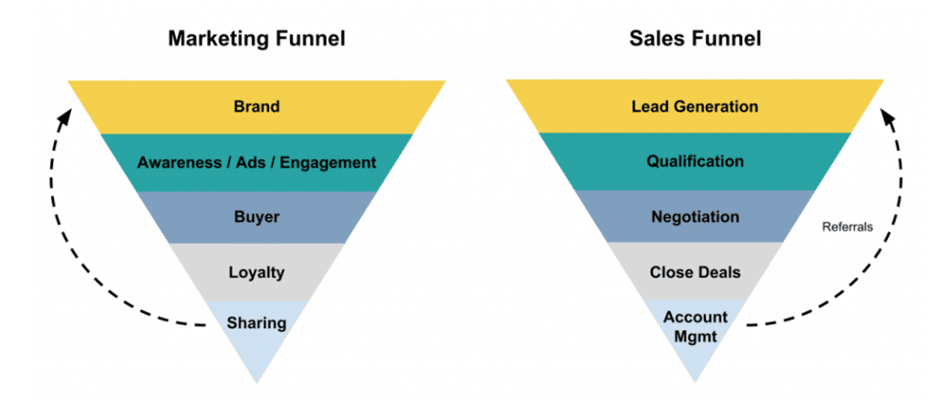
Both these terms – marketing funnel and sales funnel are quite synonymous with each other, and they have common traits and work hand in hand with each other. But there are certain distinct characteristics that set them apart. Here are they:
| Marketing Funnel | Sales Funnel |
| A procedure to convert a lead/prospect into a customer | A system that assists a prospect from the marketing phase to conversion |
| Has a stringent focus on brand image and recognition | Has a stringent focus on enhancing sales and doing more business |
| Creates more of consumer interest | Maintains consumer interest |
An Effective Sales Funnel Example
A brick-and-mortar sales funnel
- Visitors at the start of the funnel come by the store
- Some of them walk in, moving further in the funnel
- A visitor likes an area of shirts and goes through them, this is the next step
- He/she chose five of them tries them and moves to the payment counter, here approaches the end of the funnel
- He/she pays for the stuff and leaves the store, this is the end of the funnel
Sales funnel
There are many organizations like Netflix, Groupon, Help Scout, Basecamp etc. who have implemented the sales funnel in real-life and enjoyed its benefits.